Monday, 23 July 2012

Pasta with Creamy Chicken and Mushroom Sauce

Even when one is blessed with a great man, awesome friends, a good job and a cute cat, life can get a little hectic and leave one's brain feeling like mashed potatoes. Comfort food and vodka-limes are perfect for such occasions. This is usually more of a fall and winter meal, but hey, I had a craving for a rich plate of comfort food. When the world feels like a Kafka novel, sometimes the answer is a big bowl of pasta in a creamy sauce.

I made this sauce with cremini mushrooms, but portobello or shiitake would also be gorgeous with the cream and chicken. Add the Parmigiano Regginao to taste, and use the freshly grated stuff: that’s what takes this dish to a whole new level of yummy.

1 package dry farfalle pasta
2 boneless, skinless chicken breasts, cut into small strips
2 tablespoons olive oil
1 container fresh mushrooms, thinly sliced
1 small onion, finely diced
3 cloves garlic, chopped
1 teaspoon dry thyme
1/2 teaspoon crushed pepper flakes
A splash of white wine
1 cup cooking cream (15%)
1/4 cup freshly grated Parmigiano Regianno (or to taste)
A few leaves of fresh basil, chopped
Freshly cracked black pepper, to taste
Fresh parsley, chopped (for garnish)

Preheat the olive oil in a large pan, over medium heat. Cook the pieces of chicken until they are no longer pink, about 5 to 7 minutes. Set aside and keep warm. Bring a large pot of salted water to a boil, and cook the pasta according to package instruction. Add a bit of oil to the pan in which the chicken was cooked, and sauté the garlic until fragrant, for a minute or two. Add the onions, and cook for about 5 minutes. Add the mushrooms and cook until they released their liquid and brown, about 5 or 7 more minutes. Deglaze the pan with the white wine. 


Wait a couple of minutes for the alcohol to evaporate, then add the cream. Bring to a low boil, and cook until the sauce is thick enough to coat the back of a spoon. Reduce the heat to low, add the chicken, Parmigiano Regianno and basil, and blend well. 


Add the pasta and mix with the sauce. Serve generously sprinkled with freshly cracked black pepper and chopped parsley.


If your cream is not heavy enough and won't thicken, add some flour, a scant tablespoon at the time, mixing well between additions until the sauce has the desired consistency. You can also make it saucier by adding a cup of whole milk along with the cream (in which case you will have to add flour).

To turn it into an even more extreme comforting dish know as pasta tetrazzini, transfer the pasta mixed in with the sauce in an oven-proof dish,generously sprinkle with grated mozzarella and put under the broiler until the cheese is melted and golden. The calorie-coma a helping will put you in will make you forget all your worries!

Saturday, 7 July 2012

20,000 Leagues in the Dutchoven or My Spicy Octopus Stew

I love octopus and squid. Fried, in sushi, in fancy pasta sauces (seafood pasta is a big classic Christmas treat with Italians), you name it. But I had never prepared and cooked one before. The already sliced frozen stuff doesn't count, especially when you can get your hands on a whole, 2 pounds fresh octopus rather cheaply. I am on vacation, and I was in an experimental mood, so I finally gave in to my curiosity, and bought an octopus. Actually, half an octopus...


(In case you are wondering, the difference between an octopus and a squid is that the squid has two long tentacles on top of the eight arms. The squid also has an elongated head mantle, as where the octopus' mantle is more bulbous-shaped. Otherwise, their physiology is relatively similar.)

I can't really understand why some people find squid and octopus repulsive; I personally think they are some of the coolest looking creatures on the planet! Granted, they can be a bit freaky, as they are animals with very high problem-solving abilities (they can work their way out of a maze faster than rats!), alien-like body structures (no skeleton of any kind, eight legs, 3 hearts, a mantle and a beak!), the capacity to change their color to camouflage, and a squishy texture perfectly adapted to their underwater environment. But many cultures have been using them in their cuisine for ages. Italy, Greece, Spain, Portugal, Japan, Hawaii, Tunisia: these countries' cooks have been using these cephalopods to keep their families fed since the dawn of time.

I was inspired by a recipe for stewed octopus (polpi in umido) in David Rocco's "Dolce Vita", but I thought his basic stew recipe needed a few more ingredients, so I tweaked it, keeping it very Italian and flavorful. Stewing octopus in its own juices is the best way to make it nice and tender and to avoid the rubbery texture most people dread. If you plan on cooking octopus a different way, it's better to blanch it in boiling water first, to tenderize it (or do it the old-fashioned Greek way and beat it against a big rock... and I am not even kidding).

You can whip this recipe up with either one 2-pound octopus or with the equivalent quantity of baby-octopi (those can usually be found frozen in Chinese grocery stores), and you'll get 4 servings. The octopus I got was actually half an octopus, and it had already been cleaned and trimmed; all I had to do was chop the tentacles. If you buy your octopus whole and are squirmy, you can have a fishmonger clean and prepare your little cephalopod for you, but if you feel like taking down a miniature kraken, here is how it's done!

Turn the octopus inside out (yes, yes, like a sock) and rinse it under warm running water for a minute. With a sharp pairing knife, remove the beak (located right in the middle of the tentacles) by cutting around it and scooping it out. It is easier to cut the mantle from the tentacles to remove all the innards and clean it; the eyes and ink-sac have to be discarded. Once that's done, run the mantle under cold running water to get rid of all the remaining grit. Give the tentacles a good rinse too, and pat everything dry with paper towels. Lay the octopus on a cutting board and chop it up in bite-sized pieces (you may skip this step if you are using baby-octopi, which are already small enough).


Once your octopus is nice and clean, you are ready to make polpi in umido alla Gabriella!

1 2-pound octopus, cleaned and cut into bite-sized pieces (or the equivalent quantity of baby-octopi, cleaned)
2 tablespoons olive oil
4 cloves garlic, chopped
1 yellow onion, thinly sliced
1 cup dry white wine
12 cherry tomatoes, quartered
1 (14-ounce) can diced or crushed tomatoes
1 tablespoon chili flakes
1 tablespoon oregano
1 handful black olives, pitted (optional)
1/2 lemon, juiced
1/3 cup fresh basil leaves, finely cut
Sea salt and ground pepper
Lemon wedges, for serving

Preheat the olive oil in a large saucepan or dutchoven over medium heat. Add the garlic and onion and cook until fragrant, and the onions have softened, about 5 to 7 minutes.


Deglaze the pot with white wine. Let the alcohol evaporate for a minute or 2, then add the octopus, cherry tomatoes, diced or crushed tomatoes, chili flakes and oregano and mix well.


Bring to a boil, then lower the heat to medium-low and cook, with the lid on, for 1 hour, stirring occasionally.


Remove the lid, add the olives (if using) and the lemon juice and give the stew a good stir. The tomatoes should have broken down and gotten saucy. Taste the broth and adjust the seasoning carefully with sea salt and plenty of freshly ground pepper.


Lower the heat to low, and cook for another 30 minutes with the lid off, until the octopus is fork-tender and the stew has thickened a bit. Stir in the fresh basil and serve with lemon wedges for squeezing, and crusty bread to mop up the broth.


You could also try adding a tablespoon of capers along with (or instead of) the olives, but if you do, go easy on the salt. The octopus pieces will give off liquid while cooking, so they will shrink a bit, and provide a natural broth to the stew. They will also get surprisingly tender and meaty! The broth turned out wonderfully rich and tasty. Treat yourself to some fresh crusty bread to do it justice, because you wouldn't want to waste a drop. If you want to round up your meal a bit, I suggest serving it with a side of lemony roasted potatoes or similarly seasoned rice.

Seafood based dished usually go well with white wine, so you can definitely serve this with a dry white (I used Masi Modello Delle Venezie in the broth, and served the rest of the bottle with the meal), but the tomato-based broth also makes it really tasty with red wine. So really, just go with any wine you like here, as long as it's not too sweet.

In his book, David Rocco suggests using the leftovers of his stew as a pasta sauce: to do that, add a bit of olive oil to a large sauce pan over medium heat, pour in the leftover stew and let it reheat, stirring occasionally. Once it's hot, add freshly cooked pasta to the pot and mix well.

I was very happy with how this little recipe turned out, and with how much easier than anticipated it is to cook with fresh octopus. I'll definitely experiment again with this little critter!

Wednesday, 4 July 2012

Guinness Cupcakes for my Baby's Birthday

No, it's not St-Patrick's Day, I know. But it IS my boyfriend's birthday and we are both stout fans, so when he chose this as his birthday cupcake, I was quite pleased.

Stout is a dark beer, made from malt or barley, and Guinness is the most famous stout in the world. It's dry, light and creamy, and has an almost cult-ish status. It must be served at a specific temperature, poured from the tap in what is known as a double-pour, in a specifically shaped pint-glass... Some researches have also shown that there are antioxidants specific to Guinness that slow down bad cholesterol deposits, hence the famous slogan "Guinness is good for you!".

Besides all the pomp and circumstance, another thing Guinness has been increasingly known for is it's culinary uses. The fad probably started in faux-Irish pubs that wished to give their menu a more authentic look by adding stuff like beef and Guinness stew on it, but it caught on. The smoothness of this stout and it's slight coffee aftertaste eventually led some creative cooks to add it to desserts, particularly the chocolate-based cakes.


This cupcake recipe is quite simple and makes a light, chocolate-y cake with all the richness of the stout. There are several ways to ice these babies, most infamously with Bailey's frosting (and sometimes whiskey ganache) to create an Irish Carbomb cupcake. A mocha icing would also be lovely if you want to intensify the coffee-chocolate flavors, but cream cheese is a big favorite. I personally think a white icing makes them look more like little beer-cakes, since the frosting can look like the creamy head of the beer. That and I'd eat a chair if it had cream cheese frosting on it...

1 (330 ml) bottle Guinness stout
1/2 cup milk
1/2 cup vegetable oil (I used canola oil)
1 tablespoon pure vanilla extract
3 large eggs
3/4 cup sour cream
3/4 cup unsweetened cocoa
2 cups sugar
2 1/2 cups all-purpose flour
1 1/2 teaspoons baking soda

Preheat the oven to 350°F. Line a muffin pan with cupcake liners. In a large mixing bowl, pour the Guinness and give it a moment for the foam to settle, then add the milk, vegetable oil, and vanilla. Beat in the eggs, one at a time. Mix in the sour cream.


In a large mixing bowl, whisk together the cocoa, sugar, flour, and baking soda. Gradually mix the dry ingredients into the wet Guinness mixture.


Fill the liner 2/3 and bake 25 minutes, until risen and set in the middle but still soft and tender. Cool for 5 minutes before removing the cupcakes from the tins and letting them cool completely on a wire rack.


This recipe was supposed to make 24 cupcakes, but I somehow wound up with 36... Don't ask me how that happened... The important thing is that they were delicious, light and fluffy, yet loaded with chocolate flavor and a little "je-ne-sais-quoi" of Guinness. Basically, if you closed your eyes and wished really hard that your beer was dessert, those cupcakes would be what you'd find when you opened your eyes again.

The taste of beer is not overwhelming at all, and I enjoyed these so much I am considering making them my default chocolate cupcake recipe. If you prefer cooking with butter, you can also replace the milk and oil with 1 stick (1/2 cup) of unsalted butter, melted and added to the wet ingredients. It was also my first time using organic cane sugar instead of ordinary white sugar (I recently attended a conference where a nutritionist explained how they make regular sugar, and let's just say it's pretty effing disgusting, so I decided to switch). The texture is the same and the taste is great, so I think cane sugar is totally worth hunting down and baking with.

And once more with feelings, here is my favorite cream cheese frosting recipe. It makes enough to frost 12 cupcakes, so double or triple it to go with the Guinness cupcakes!

1 stick (1/2 cup) butter, at room temperature
1/2 cup cream cheese, at room temperature
2½ cups confectioner sugar
1 tablespoon vanilla extract

Using the whisk attachment of a mixer, whip the butter and cream cheese on high speed for about 5 minutes, scraping the bowl down as necessary. Reduce the speed to low and slowly add the powdered sugar until all is incorporated. Add the vanilla and mix to combine. Increase the speed to medium high and whip for a few minutes until the frosting is light and fluffy, scraping the bowl as necessary.

This is seriously the perfect frosting: the texture is perfect for piping or spreading, it's not too sweet with just enough of the tangy cream cheese taste, and it always turns out just right. It balances the rich sweetness of the Guinness cakes perfectly. I used a medium-flower piping tip to apply the frosting, and gave my cupcakes a light sprinkling of chocolate doodles.


I am very proud of how adorable and tasty they turned out! They were the perfect cute dessert for a simple and quiet celebration of my sweetheart's birthday.

 
Love you, babe! xxxxx

Sunday, 1 July 2012

Grilled Apricot and Feta Salad

Feta is one of my favorite cheeses. The crumbly, yet creamy, salty goodness of a good feta is just divine in salads, and the summery recipe below is absolutely gorgeous. But be warned! It is for adventurous palates only! I found this little recipe in Nadia G.'s "Cookin' for Trouble". It's a fresh, tasty salad with a very posh look to it, so if you have guests to impress at any time this summer, this is a great way to start a stunning meal!

Fresh apricots are one of my favorite fruits, and when they are in season, I always make sure to have some handy. As delicious as they are just by themselves, or worked into desserts, they are also great in savory dishes because they are not overly sweet. In fact, they are perfect for those who, like me, enjoy a sweet-and-salty combo of flavors. For this recipe, pick them ripe, but still firm: you want them to keep their shape through the grilling process.

The dressing is an amazing blend of sweet honey and tangy wine vinegar. For dressing like this, a small food processor is the best tool you can get your hands on. I have mentioned it before, but small blender attachment for my Cusinart Smart Stick is the ultimate tool for making home-made salad dressings.

The pickled red onions have a piquant bite that's quite surprising paired with our lovely apricots. Onions prepared like that would also be delicious in other salads or as a garnish in hamburgers. Don't let them get too soft: their little toothy crunch is quite satisfying.

6 tablespoons olive oil
1/3 cup champagne or white wine vinegar
1 tablespoon creamed honey
1 teaspoon vanilla extract
1 garlic clove
1 tablespoon poppy seeds
Sea salt and ground pepper, to taste
8 apricots, halved and pitted
1/2 small red onion, finely sliced
1 cup crumbled feta cheese
Fresh mint leaves, for garnish

In a food processor, blend 4 tablespoons of olive oil, 3 tablespoons of champagne vinegar, honey, vanilla extract and garlic clove. Fold in the poppy seeds, sea salt and freshly ground pepper.


Heat a grilling pan to medium-high and pray with non-stick cooking spray. Baste the apricot halves with olive oil. Using tongs, sear the fleshy side of the apricots for 90 seconds to 3 minutes, and then turn over to sear the skin side for 1 minute or 2 more. Remove them from the heat and let them cool.


Heat a small saucepan over medium-high heat. Add the onion slices, pour in the rest of the champagne vinegar, stir and simmer until the onion slices turn bight pink, about 30 seconds. Remove from the heat and let cool slightly.

 
Divide the apricot halves equally among 4 plates. Sprinkle each serving with 1/4 cup of crumbled feta and a heaping tablespoon of pickled onions. Drizzle with the vinaigrette and garnish with fresh mint leaves.


How pretty is this?! This salad makes a perfect entrée for grilled fish or chicken dishes, or even a light lunch. A fruity rosé is always good on a warm summer day, and it goes especially well with this juicy, crunchy treat.

Only make as much as you need: cooked fruits like that tend to get very mushy and do not keep well as leftovers.

Thursday, 28 June 2012

Pork Stir-Fried with Fresh Ginger

Stir-fries are brilliant week-night meals. They are generally very easy, and once everything is chopped up, they are ready in the blink of an eye. This one is great, because it is very flavorful and and packed with veggies. Simple and delicious. And on a Monday evening, what could possibly be better than that?

I found this dish in Nancie McDermott's "Real Thai", tweaked it a bit (her servings tend to be tiny) and I find it to be a great basic recipe for a quick stir-fry. You can adjust the heat of ginger and Sri Racha to taste (I love ginger and my sweetie loves spicy, so when we make it, it generally sets off our fire alarm), but it's practically impossible to screw up. The original recipe called for the ginger to be cut into long, thin slices, but that seemed to concentrate it's taste in a few bites. If you chop it instead, the lovely flavor will be in every mouthful.

2 tablespoons vegetable oil
1 tablespoon coarsely chopped garlic
1/2 pound pork, thinly sliced
3/4 to 1 cup fresh ginger, chopped
1 small onion, sliced lengthwise into thin wedges
2 tablespoons fish sauce
1 package fresh mushrooms (oyster mushrooms, if you can find them), thinly sliced lengthwise
4 tablespoons soy sauce
1 small red bell pepper, cut into thin strips
2 tablespoons water
1 to 2 tablespoons Sri Racha sauce
1 teaspoon sugar

Heat a wok over medium-high heat until very hot. Add the oil and swirl to coat the surface. When the oil is very hot, drop a piece of garlic in the pan: if it sizzles immediately, the oil is ready. Add the garlic and toss until it just begins to turn golden, about 15 seconds. Add the pork and stir-fry until it is no longer pink, about 2 minutes.

 
Add the ginger and toss to coat with the oil. Let it cook one minute and then add the onion and fish sauce and toss to mix them in. Add the mushrooms and soy sauce and stir-fry until the mushrooms have softened and are shiny, about 1 minute.


Add the bell pepper, Sri Racha sauce, water and sugar and toss well. Cook without stirring for 1 minute. Taste the sauce: it should have a pleasant balance of hot, salty and sweet. Adjust with soy sauce and/or sugar, as needed. Transfer to a serving platter and serve hot, with some jasmine rice or rice noodles. We had it on vermicelli when I took the pictures and I have to say I prefer it on noodles of any size, as it's not saucy enough for the flavor to really be absorbed by rice.


The meat will be very tender, and there will be a lovely ginger heat in every bite. You can also substitute the pork for the equivalent quantity of chicken or tofu, cut into bite-sized pieces. Play around with the veggies, and the possibilities are just about endless.


If fish sauce makes you queasy (the smell grosses the living daylights out of me, even more so when I start thinking about what goes it in, so I use it as little as possible), simply use 6 tablespoons of soy sauce, and add a pinch of salt when you add the sugar.

Monday, 25 June 2012

Chicken Parmesan

My mother kept a version of this recipe up her sleeve when she wanted to make sure my brother and I would show up for dinner. There is a reason chicken Parmesan is legendary as far as getting finicky kids to eat. It. Just. Works. Breaded chicken, hot pasta, a simple tomato sauce and melted cheese. Duh. What sane kid would turn something like this down?

I may be all grown up now (in body, if not in mind), but every once in a blue moon, my inner child gets a craving for a plate of this nostalgic indulgence. I had only ever made it with processed ingredients before: frozen chicken or veal cutlets and jarred sauce. I blush at the memory, and I won't ever do that again, scout's honor! Especially since I found out that making chicken parm from scratch is way easier than I had imagined. Sure, there is a bit of cleaning to do after, and you gotta time yourself well to get the pasta and chicken ready at the same time, but it comes together without a hitch. No wonder moms have been using this to get their progeny around the table for ages!

Psst! You don't really have to use chicken. Scalloped veal is a classic alternative, very popular with grown-ups, and vegetarians will find a recipe for chickpea cutlets at the end of this post, because everyone should be able to enjoy this recipe. I happened to have plenty of chicken handy, so I made this:
4 garlic cloves, peeled and chopped
2 tablespoons extra-virgin olive oil
1 (28 ounce) can crushed tomatoes
1/2 teaspoon dried basil
1/4 cup fresh basil, sliced
1/4 teaspoon dried oregano
1 tablespoon red wine vinegar
Sea salt and freshly ground pepper, to taste
2 large boneless, skinless chicken breasts, halved crosswise
1 large egg
1 cup dry bread crumbs
1 package spaghetti or rottini
1/4 cup extra-virgin olive oil
1/2 cup mozzarella cheese, grated
1/4 cup Parmesan cheese, grated, plus extra for serving

First, make the uber-simple tomato-basil sauce. In a large saucepan, sauté the garlic and 2 tablespoons oil over medium-high heat until it starts to sizzle. Stir in the tomatoes, basil, oregano, red wine vinegar (if you prefer a sweeter sauce, skip the vinegar and add 1 teaspoon brown sugar instead), a pinch of salt and a few grinds of pepper. Bring to a simmer; cook until the sauce thickens a bit and the flavors meld, 10 to 12 minutes. Add the fresh basil for the last 5 minutes on the heat. Cover and keep warm (you can make the sauce up to a couple of hours early, if you need: simply reheat it over medium-low heat, stirring constantly, when the chicken goes under the broiler).


Put the chicken pieces between two sheets of plastic wrap and pound, using a heavy pan, until the cutlets are about 1/4-inch thick. Bring a large pot of salted water to a boil. In a shallow bowl, beat egg until well-blended. Mix bread crumbs with some black pepper on a plate. Preheat broiler. Working one cutlet at a time, dip both sides of each in beaten egg, then in bread crumbs. Put cutlets on a wire rack set over a cookie sheet (this will save you from picking up massive messes of crumbs and drippings).


Heat the remaining olive oil over medium-high heat in a 12-inch skillet. When oil starts to shimmer, add the cutlets and sauté until golden brown on each side, about 5 minutes total. Wash and dry the wire rack and return to the cookie sheet. As the cutlets cook, prepare the pasta according to package directions. Transfer the cutlets to the clean wire rack over the cookie sheet. Top each with a portion of the cheeses. Broil the cutlets, 4 to 5 inches from heat source, until cheese melts and is spotty brown (if your broiler is on "high" this will take only a couple of minutes). Drain the pasta. Put a cutlet and a portion of pasta on each plate. Spoon 2 or 3 tablespoons of sauce over the cutlet, then sauce the pasta as desired. Serve with extra Parmesan for sprinkling.


This recipe serves 4, and you may get a bit of leftover pasta and sauce. The cutlets reheat much better than I had expected in the microwave, but you can always half the recipe if you are only cooking for two.

For my vegetarian friends, here is a recipe for chickpea cutlets (from the ever-awesome "Veganomicon") that can be used as an alternative to meat! Follow the recipe below, before broiling and serving them as you would with the chicken.

1 cup cooked chickpeas
2 tablespoons olive oil
1/2 cup vital wheat gluten
1/2 cup plain breadcrumbs
1/4 cup vegetable broth
2 tablespoons soy sauce
2 cloves garlic, grated
1/2 teaspoon lemon zest
1/2 teaspoon dried thyme
1/2 teaspoon Hungarian paprika
1/4 teaspoon dried sage

In a mixing bowl, mash the chickpeas together with the oil until there are no whole chickpeas left. Add the remaining ingredients and knead for about 3 minutes, until strings of gluten have formed. Pre-heat a large skillet over medium heat. Meanwhile, divide the cutlet dough into 4 equal pieces. Knead each piece in your hand for a few moments and then flatten and stretch each one into a rough;y 4 by 6-inch rectangular cutlet shape. Add a thin layer of olive oil to the skillet. Place the cutlets in the pan and cook on each side for 6 to 7 minutes. They are ready when they are lightly browned and firm to the touch.

Tada! Now go feed your finicky inner child.

Monday, 18 June 2012

Meat and Mushroom Pasta Bake of Extreme Yumminess

I had set myself the goat of making meat and mushroom lasagne, and in the course of experimenting with making the ultimate mushroom bolognese, I had a little fun with a different kind of pasta bake that turned out so freaking delicious, I really could not NOT share it here.

It was really hot and sticky, and I couldn't bring myself to make bechamel for the lasagne, so I made a seriously tasty sauce, threw it on lovely macaroni, covered it in mozzarella and broiled the whole thing. And my, was that ever an awesome dinner! Stick-to-your-rib filling, rich and utterly satisfying.

Here is the recipe for the meat and mushroom sauce, and the steps to turn it into enough baked macaroni to feed an army. Keep this one flagged for serious hungry evenings, or simply for when you want to make yourself enough lunches for a month.

2 tablespoons olive oil
1 teaspoon dried oregano
1 teaspoon dried thyme
1 teaspoon chili flakes
1 large yellow onion, chopped
3 garlic cloves, chopped
8 ounces fresh cremini or mini-portobello mushrooms, thinly sliced
1 pound ground beef
1 (28 ounce) can crushed tomatoes
1 (14 ounce) can garlic tomato paste
1/3 cup red wine
Freshly ground black pepper
1 package dry macaroni, or other small pasta, like shells
1 (340 gram) package of pizza mozzarella, grated

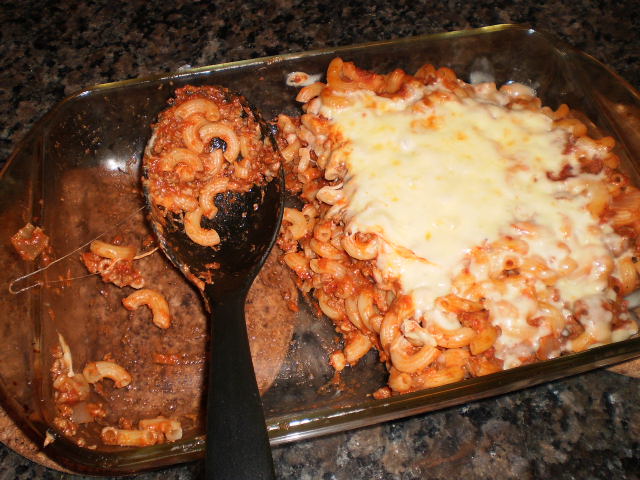
Heat the olive oil in a large saucepan over medium-heat. Add the garlic and onion and sauté until the garlic is fragrant and the onions are soft and slightly golden, 5 to 7 minutes. Add the mushrooms and cook, stirring often, until they have released their liquid and are getting colored. Add the ground beef, breaking up the big pieces with a spoon, and cook until the meat crumbles, about 7 minutes. Add the crushed tomatoes and tomato paste and mix well to blend everything. Add the red wine, stir and bring to a boil. Lower to a simmer, cover and cook for 30 minutes, stirring occasionally. Bring a large pot of salted water to a boil, and cook the pasta according to the package's instructions. Preheat the broiler and lightly grease a large baking dish. When they are almost al dente, drain and mix in with the sauce. Spoon the mixture in the baking dish and generously sprinkle with the grated mozzarella. Put under the broiler for 10 to 15 minutes, until the cheese is melted, golden and bubbly.

Behold!


I was so pleased with this little experiment, and so was my boyfriend! The sauce will be back when I actually get around to tackling lasagne, but it would also be great on any other kind of pasta. And for my vegetarian friends out there, I sneaked with mushroom faux-bolognese recipe from theitaliandishblog.com, cuz everyone should enjoy a filling mushroom pasta sauce!

2 tablespoons olive oil
1 large carrot, peeled and diced small
2 medium sized celery ribs, diced small
1/2 medium onion, diced small
Sea salt or kosher salt and freshly ground black pepper
3 garlic cloves, grated or minced
3/4 cup red wine
1 pound mixed fresh mushrooms, chopped
1 ounce dried porcini mushrooms (optional)
1 1/2 cups vegetable broth
1 (15 ounce) can whole tomatoes, crushed by hand
1 (15 ounce) can tomato paste
2 bay leaves
2 teaspoons sugar
2 teaspoons dried oregano
1 teaspoon dried thyme

Soak the dried porcini mushrooms in 1 cup of very warm water and let sit for 20 minutes.  Strain through a cheesecloth or a coffee filter and keep the liquid. Sauté the onion, carrot and celery in a large pot in the olive oil with a big pinch of kosher or sea salt and a few grindings of pepper.  Let the vegetables cook for about 8 minutes, on low heat.  Add the garlic and cook for one minute. Increase heat and add the wine.  Cook for 5 minutes, making sure the wine is simmering. Add the mushrooms. Add the rest of the ingredients, including the reserved porcini mushroom liquid. Simmer, uncovered, for about an hour to an hour and a half, until the sauce has reduced down and a lot of the liquid has cooked off - cook until you like the thickness of the sauce. Taste for salt and adjust seasoning.

Veggie-lovers will have their money's worth with that sauce! It's also a great summer substitute for the meaty bolognese, which is obviously a bit heavier, and therefore not always hot-weather appropriate. It's also so jam-packed with delicious vegetables, you won't really miss the meat.

There you have it! An awesome pasta-bake that will be universally satisfying! Don't be afraid of the quantity, as it freezes very well if you don't have rabid dinner guests to clear your baking dish.